Your Essential Banarasi Silk Saree Guide: Unveiling the Legacy of Indian Weaving
Dive into our comprehensive Banarasi silk saree guide and discover the intricate history, types, and artistry behind these timeless Indian treasures. Learn to identify and care for authentic Banarasis.
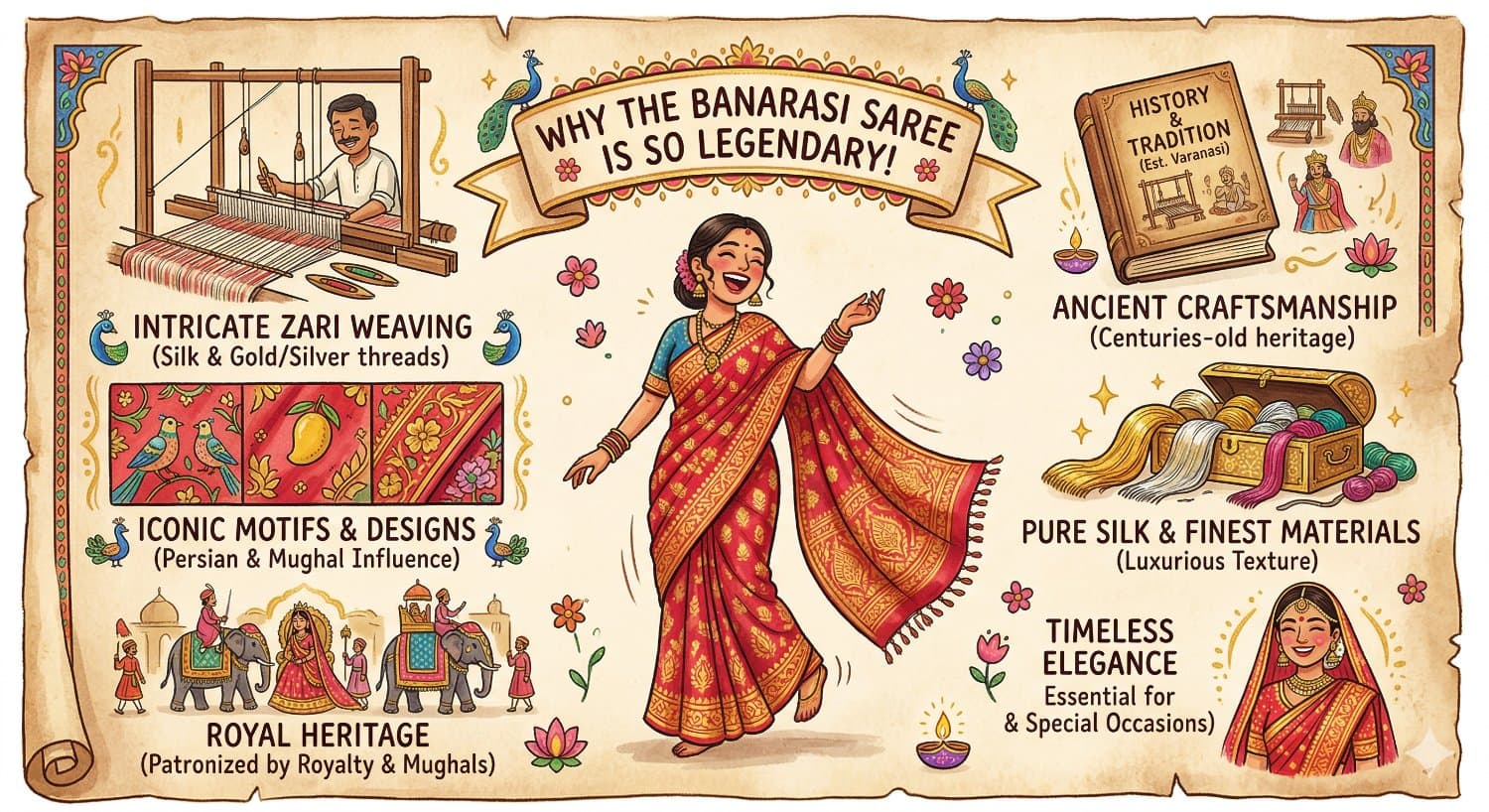
A Banarasi saree is more than just fabric; it's a whisper of history, a testament to unparalleled craftsmanship, and a vibrant canvas of Indian heritage. For centuries, these exquisite silk drapes have adorned royalty, graced significant celebrations, and become cherished heirlooms passed down through generations. At Raasa by Anisha, we believe every Banarasi tells a story, and today, we've crafted this essential Banarasi silk saree guide to help you understand, appreciate, and fall in love with these magnificent creations.
The Enduring Allure of Banarasi Silk
Hailing from the ancient city of Varanasi (formerly Banaras), these sarees are renowned for their rich brocade work, intricate designs, and the use of fine silk and sometimes metallic threads. The journey of a Banarasi saree begins not just with a weaver, but with generations of skill, dedication, and artistic vision. They are truly works of art, embodying the soul of Indian textile traditions.
What Makes a Banarasi Saree Truly Unique?
To truly appreciate the grandeur of a Banarasi, one must understand the elements that contribute to its distinctive character. It's the meticulous interplay of silk, weave, and motif that defines the very essence of a Banarasi silk saree.
The Silk: A Foundation of Luxury
The quality and type of silk are paramount to a Banarasi saree's feel and drape. While 'silk' is the general term, Banarasis often employ specific varieties:
- Katan Silk: This is the most traditional and sought-after silk for Banarasis. Katan refers to a plain-woven pure silk fabric with individually twisted silk threads that are then woven together. It results in a very fine, lustrous, and durable fabric, giving the saree its characteristic crisp yet fluid drape.
- Kora Silk (Organza): A lighter, more translucent silk, Kora Banarasis offer a delicate elegance. The weave is open, giving it a sheer quality, often adorned with intricate zari work that stands out beautifully against the transparent background.
- Georgette Silk: Known for its crinkled texture and lightweight, flowing drape, Georgette Banarasis are a popular choice for those seeking comfort without compromising on traditional grandeur. They are easier to manage and carry.
- Shattir Silk: A simpler, more affordable variety of silk, Shattir is sometimes used as the base for Banarasis, offering a good drape with a slightly less intense sheen than Katan.
The Weave: Artistry in Every Thread
The weaving technique is what transforms silk threads into a shimmering tapestry. Banarasi sarees are primarily known for their brocade work, where patterns are created by intertwining various coloured silk and metallic threads directly into the warp and weft.
- Brocade: This is the hallmark of a Banarasi. The intricate patterns, often floral or Mughal-inspired, appear to be embroidered onto the fabric, but they are an integral part of the weave itself. The reverse side will show floating threads where the pattern is not present.
- Jangla: A more elaborate and dense brocade, Jangla Banarasis feature complex, sprawling floral and bird motifs that cover the entire body of the saree. These are often heavier and more opulent.
- Tissue: Characterized by its metallic sheen, Tissue Banarasis incorporate gold or silver zari threads in both the warp and weft, giving the fabric a distinct shimmering, 'tissue-like' appearance.
The Motifs: Stories Woven in Silk
The motifs used in Banarasi sarees are deeply symbolic and reflect a rich cultural heritage. These designs are often influenced by Mughal art and architecture.
- Floral Motifs (Butidar, Latifa Buti): Intricate floral patterns, often featuring kalga and bel (paisley and creeper) designs, are ubiquitous. The 'buti' refers to small, distinct motifs scattered across the body.
- Aam (Mango) or Paisley Motifs: The classic mango-shaped motif is a timeless favourite, appearing in various sizes and arrangements.
- Shikargah: A highly detailed and rare motif, Shikargah sarees depict hunting scenes with animals, birds, and human figures, showcasing extraordinary weaving skill.
- Jhallar (Fringe): This border design, often resembling a string of upright leaves, is a distinctive feature of many Banarasi sarees, providing a beautiful finish to the pallu and border.
Types of Banarasi Sarees: A Spectrum of Beauty
Beyond the foundational elements, Banarasis are further categorized by their dominant characteristics, offering a diverse array for every preference and occasion. Let's delve into the diverse types of Banarasi silk sarees you might encounter:
Katan Banarasi
As mentioned, Katan is pure silk, resulting in a robust yet soft fabric. Katan Banarasis are known for their rich, dense brocade work, often featuring heavy zari borders and pallus. They are the epitome of traditional Banarasi craftsmanship, ideal for weddings and grand festivities.
Kora Organza Banarasi
Lightweight and sheer, Kora Organza Banarasis offer a contemporary take on traditional designs. The transparency of the fabric beautifully highlights the intricate zari work, creating a delicate yet opulent look. Perfect for daytime events or when you desire a lighter drape with Banarasi elegance.
Georgette Banarasi
These sarees combine the flowy comfort of Georgette with the traditional Banarasi brocade. The crinkled texture adds a unique dimension to the fabric, making them easy to drape and carry. Georgette Banarasis are a popular choice for those who value both style and ease.
Tissue Banarasi
The name 'Tissue' perfectly describes the fabric's appearance – light, shimmering, and often woven with gold or silver zari throughout. Tissue Banarasis are incredibly glamorous, catching the light beautifully, and are often chosen for evening events or as a statement piece.
Jangla Banarasi
Considered among the most luxurious and intricate, Jangla Banarasis are characterized by their elaborate, all-over floral and foliate motifs. The brocade work is dense and covers the entire body of the saree, making them exceptionally heavy and grand. They are a true collector's item and often reserved for the most special occasions.
How to Identify an Authentic Banarasi Saree
Investing in an authentic Banarasi silk saree is a significant decision. With imitations in the market, knowing how to spot a genuine handloom Banarasi is crucial. Here's your guide to discernment:
The Reverse Side Test
The most telling sign of an authentic handwoven Banarasi is its reverse side. Due to the intricate brocade weaving, the back of the saree will have floating threads (extra warp/weft threads not integrated into the pattern) and often a neat, hand-finished look where the zari threads are cut and tucked in. Machine-made sarees will have a smooth, flat reverse with no loose threads.
The Silk Mark
Always look for the 'Silk Mark India' label. This is a government-issued certification ensuring that the product is made of pure natural silk. While it doesn't guarantee handloom, it assures the quality of the silk.
The Finish and Feel
Genuine Banarasis, especially those in Katan silk, will have a distinct, slightly stiff yet fluid drape. The zari work, often made of real gold or silver threads (or good quality imitation zari), will feel smooth and integrated, not rough or prone to snagging. The colours will be rich and deep, often with a subtle sheen.
Caring for Your Banarasi Treasure
An authentic Banarasi saree is an investment that, with proper care, can last for generations. Here are some essential tips:
- Dry Clean Only: Always opt for professional dry cleaning. The delicate silk and zari work require specialized care.
- Storage: Store your Banarasi in a cool, dry place, wrapped in a pure cotton or muslin cloth. Avoid plastic covers, which can trap moisture and discolour the zari.
- Folding: Refold your saree periodically (every 3-6 months) to prevent permanent creases and damage to the zari at the folds. You can also hang them on padded hangers.
- Sunlight: Keep your saree away from direct sunlight, which can fade the colours and tarnish the zari.
Styling Your Banarasi Saree: Timeless Elegance
A Banarasi saree is a statement in itself, requiring minimal embellishment. For a classic look, pair it with traditional gold jewellery, a neatly tied bun adorned with fresh flowers, and a matching blouse. For a more contemporary twist, consider a contrasting blouse, delicate diamond jewellery, or an unconventional drape. Remember, the saree is the star – let its grandeur shine.
Discover Your Perfect Banarasi at Raasa by Anisha
We hope this Banarasi silk saree guide has illuminated the rich history, intricate craftsmanship, and diverse beauty of these timeless treasures. At Raasa by Anisha, we are passionate about bringing you handpicked, authentic Banarasi sarees, each a testament to India's glorious weaving traditions. Explore our curated collection, where every piece tells a story of elegance and heritage. Unsure which Banarasi is right for you? Our virtual try-on feature allows you to experience the drape and beauty from the comfort of your home, ensuring your chosen saree is a perfect reflection of your style and personality. Let us help you find the Banarasi that speaks to your soul.