The Patola Saree: Unraveling Its Royal History and Crafting Your Ultimate Buying Guide
Explore the majestic patola saree history, its unique double ikat artistry, and an essential buying guide to help you choose an authentic heirloom.
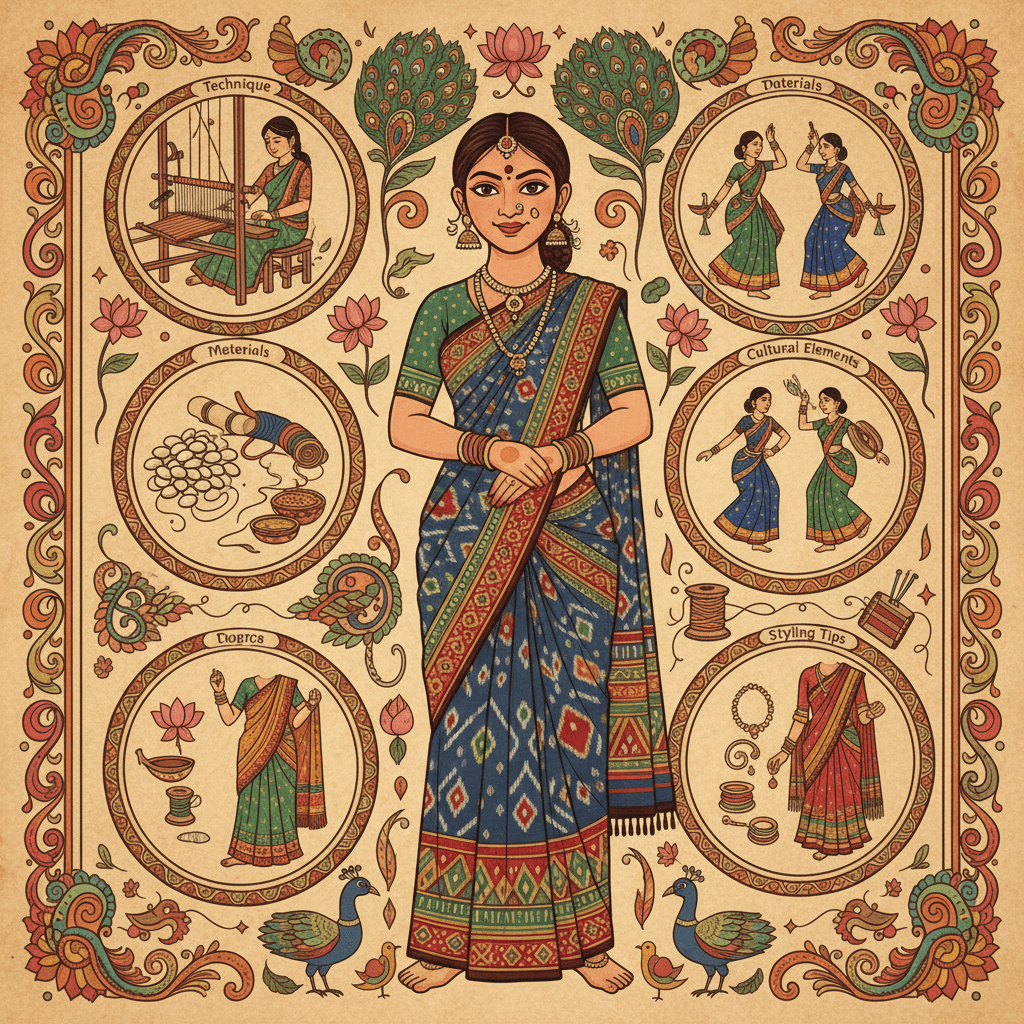
Namaste, dear connoisseurs of timeless elegance. At Raasa by Anisha, we believe that every saree tells a story, a whisper of heritage woven into its very threads. Today, we invite you on a journey to discover one of India's most revered and regal textiles: the Patola saree. Its mystique, intricate craftsmanship, and profound history make it not just an attire, but a wearable work of art.
Delving into the rich patola saree history and buying guide is an exploration of cultural legacy, masterful artistry, and discerning taste. Join us as we unravel the secrets of this magnificent drape.
The Regal Roots: Patola Saree History Unveiled
The story of the Patola saree begins in the ancient city of Patan, Gujarat, dating back to the 11th century. This textile wasn't just fabric; it was a symbol of immense wealth, status, and power, often reserved for royalty and nobility. The word 'Patola' itself is derived from the Sanskrit word 'Pattakulla,' meaning silk fabric.
Legend has it that the Solanki dynasty king, Kumarpal, brought 700 Patola weavers from Jalna, Maharashtra, to Patan to create these exquisite textiles for his court. He was so enamored by their beauty and spiritual significance that he decreed Patola sarees be worn for auspicious occasions and religious ceremonies.
Throughout centuries, the art of Patola weaving remained a closely guarded family secret, passed down from generation to generation. Each saree could take months, sometimes even years, to complete, making it an incredibly precious commodity. Historically, Patola sarees were also a significant item of trade, reaching Southeast Asian countries like Indonesia, where they were highly valued and even influenced local textile traditions. This rich patola saree history is what imbues each piece with an unparalleled depth and narrative.
The Art of Double Ikat: What Makes Patola Unique?
What truly sets the Patola saree apart from any other textile in the world is its extraordinary 'double ikat' weaving technique. Ikat, derived from the Indonesian word 'mengikat' meaning 'to tie,' refers to a dyeing method where threads are tied and resist-dyed before they are woven into fabric.
In most ikat traditions, either the warp (longitudinal threads) or the weft (transverse threads) are dyed using this method. However, Patola is unique because both the warp and the weft threads are meticulously resist-dyed according to a precise pattern before weaving begins. This requires unimaginable precision and mathematical exactitude, as the dyed patterns on both sets of threads must align perfectly during the weaving process to form the intended design.
The process is arduous and time-consuming. First, the silk yarns are carefully measured and marked. Then, specific sections are tied tightly with cotton threads to resist the dye, a process that is repeated for each colour. After dyeing, the ties are removed, and the pattern is revealed on the individual threads. Only then can the weaving commence, with skilled artisans painstakingly aligning each thread to create the intricate motifs that appear identical on both sides of the fabric. This labour-intensive process is why a single authentic Patola saree can take anywhere from six months to a year, or even longer, to complete, often involving 3-4 weavers.
A Tapestry of Motifs: Decoding Patola Designs
The motifs found on Patola sarees are not merely decorative; they are rich in symbolism, often reflecting nature, folklore, and religious beliefs. These patterns are typically geometric and highly stylised, a testament to the double ikat technique's inherent limitations and the weavers' mastery in overcoming them.
Some of the most iconic Patola motifs include:
- Nari Kunj Bhat: Featuring elephants, flowers, dancing women, and parrots, symbolising fertility and good fortune.
- Pan Bhat: Designs depicting betel leaves, often associated with auspiciousness.
- Chabdi Bhat: Basket designs, representing prosperity.
- Ratanchowk: Geometric patterns resembling jewel squares.
- Vagh Bar: Tiger stripes, signifying strength and courage.
- Phulwari Bhat: Floral patterns, celebrating nature's beauty.
Each motif is rendered with such clarity and vibrance that it tells a story, making every Patola saree a living canvas of Indian heritage.
Your Essential Patola Saree Buying Guide
Acquiring a Patola saree is an investment, a commitment to owning a piece of living history. To ensure you make an informed choice, here is your comprehensive patola saree buying guide.
Authenticity is Key: Patan vs. Rajkot Patola
This is perhaps the most crucial distinction to understand. True, authentic Patola sarees originate from Patan, Gujarat, and are always 'double ikat.' They are handwoven, labour-intensive, and consequently, command a very high price.
- Patan Patola: This is the original, pure double ikat, handwoven masterpiece. The motifs are precise, and the saree looks identical on both sides. These are rare and expensive heirlooms.
- Rajkot Patola: While still beautiful, Rajkot Patola sarees are typically 'single ikat' (only the warp or weft threads are dyed using ikat technique) and are often power-loomed or semi-handloom. They are more affordable and accessible but lack the historical authenticity and intricate complexity of a Patan double ikat. They will not look identical on both sides. When seeking genuine Patola, always clarify if it's Patan double ikat.
Assessing Quality: What to Look For
- Weave Precision: In an authentic Patan Patola, the motifs should be incredibly sharp and well-defined, despite the double ikat technique. Any blurriness might indicate a lower quality weave or a single ikat imitation.
- Identical Sides: The hallmark of a true double ikat Patola is that both the front and reverse sides of the saree are virtually indistinguishable. The colours and patterns should be equally vibrant and clear on either side.
- Fabric: Authentic Patolas are woven from pure mulberry silk, which lends them a characteristic soft drape and subtle sheen. Feel the fabric for its luxurious texture.
- Colour Fastness: Historically, natural dyes were used. Modern Patolas may use synthetic dyes, but a good quality saree will have excellent colour fastness. A slight bleeding might occur in the first few washes with natural dyes, which is normal, but excessive bleeding indicates poor quality.
- Weight and Drape: A Patola saree, while rich, should drape beautifully and feel substantial yet not overly stiff. Its weight is a testament to the density of the silk and weave.
Understanding the Price Tag
The price of a genuine Patan double ikat Patola saree can range from several thousands to tens of thousands of pounds. This high cost is justified by:
- Time and Labour: Months to years of dedicated handweaving by master artisans.
- Skill: The unparalleled expertise required for the double ikat technique.
- Raw Materials: The use of high-quality pure silk.
- Rarity: The limited number of families who still practice this art.
Consider it not just a purchase, but an investment in art, history, and a future heirloom.
Caring for Your Patola Treasure
To preserve the beauty and longevity of your Patola saree:
- Dry Clean Only: Always opt for professional dry cleaning.
- Storage: Store your saree in a cool, dry place, ideally wrapped in a soft muslin cloth or acid-free tissue paper. Avoid plastic covers, which can trap moisture.
- Avoid Direct Sunlight: Prolonged exposure to sunlight can cause colours to fade.
- Refold Periodically: To prevent permanent creases, refold your saree along different lines every few months.
Why a Patola Saree is More Than Just Fabric
Owning a Patola saree is an embrace of history, a celebration of unparalleled craftsmanship, and a testament to enduring beauty. It's a garment that transcends fashion trends, becoming a cherished family heirloom, passed down through generations, each fold whispering stories of the past. This comprehensive patola saree history and buying guide aims to empower you to appreciate and acquire these magnificent textiles with confidence.
At Raasa by Anisha, we are deeply committed to honouring and showcasing India's rich textile heritage. Our curated collection features handpicked sarees that embody authenticity, artistry, and timeless elegance. We invite you to explore our exquisite range of Indian sarees, including select Patola pieces, and experience the magic of these artisanal creations. With our personalised virtual try-on service, you can discover your perfect drape from the comfort of your London home, ensuring your chosen saree resonates with your unique style and spirit.