Saree Fabrics 101: A Beginner's Guide
Confused between Georgette and Chiffon? Wondering when to wear Silk? Our comprehensive guide decodes common saree fabrics to help you choose the perfect drape.
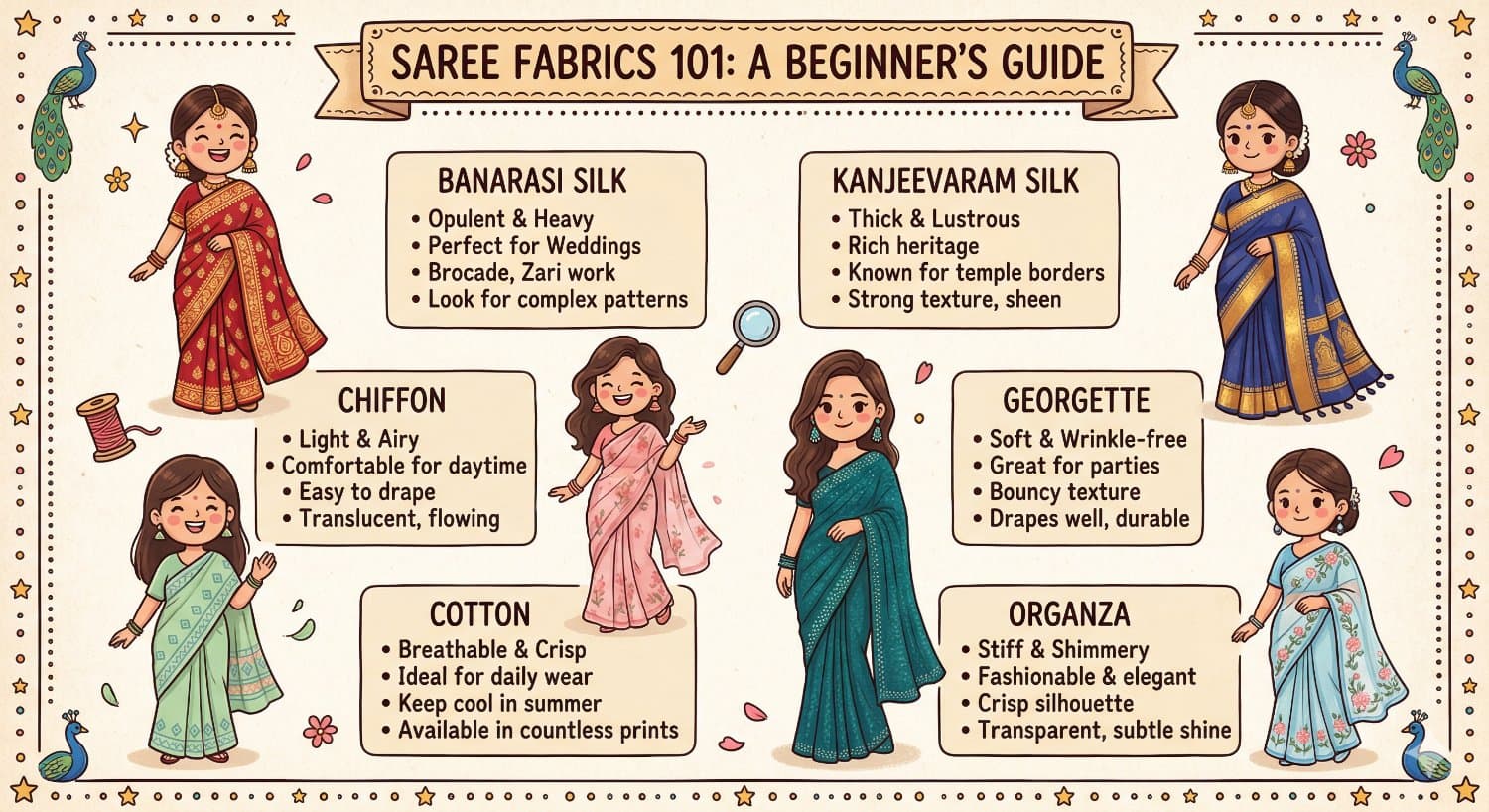
Choosing the right saree isn't just about the color or design—it's about the fabric. The fabric determines how the saree drapes, how comfortable it feels, and where it should be worn.
1. Cotton: The Comfort Queen
Light, breathable, and perfect for tropical climates.
- Characteristics: Crisp, matte finish. Holds pleats well.
- When to wear: Daily wear, office, summer outings.
- Varieties: Mulmul, Kota Doria, Tant.
2. Silk: The Royal Choice
Luxurious, shiny, and grand. Silk sarees are heirlooms passed down through generations.
- Characteristics: Rich lustrous sheen, heavy drape.
- When to wear: Weddings, festivals, grand celebrations.
3. Georgette & Chiffon: The Fluid Drapes
These are lightweight, sheer fabrics that cling to the body, offering a slimming silhouette.
- Georgette: Has a slightly grainy texture. Durable and easy to drape.
- Chiffon: Smoother and more lustrous than georgette but more delicate.
- When to wear: Evening parties, dates, cocktail events.
4. Organza: The Modern Statement
Stiff, sheer, and voluminous. Organza is currently ruling the fashion charts.
- Characteristics: Does not pleat easily; creates a balloon-like silhouette.
- Style Tip: Wear with a well-fitted, contrasting blouse.
5. Linen: The Intellectual Chic
Made from flax fibers, linen is breathable like cotton but has a thicker, more textured feel.
- Vibe: Sophisticated, understated luxury.
- When to wear: Corporate meetings, art galleries, luncheons.
For Beginners
Start with Georgette or Crepe. They are manageable, don't wrinkle easily, and stay in place all day.
For Experts
Organza and Tissue Silk require practice but offer the most dramatic and high-fashion looks.